
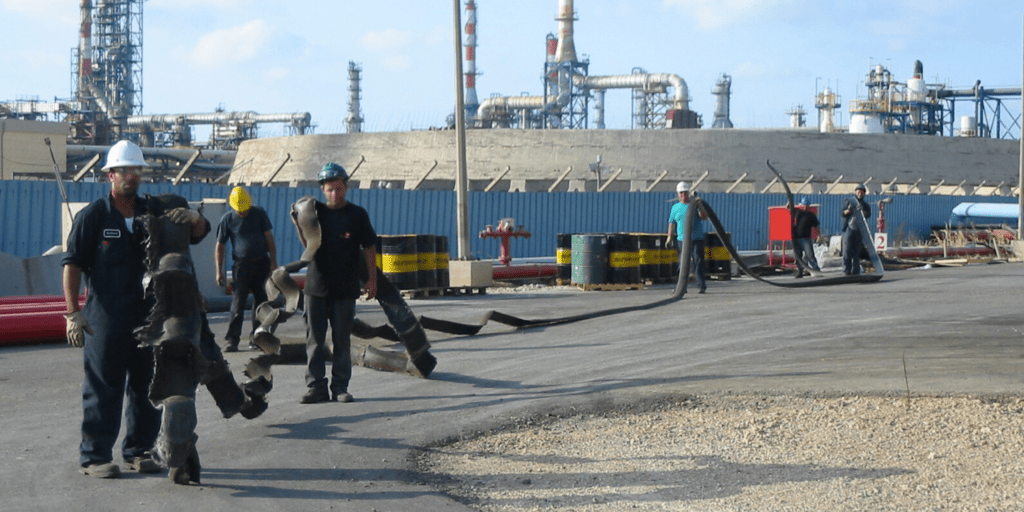
For oil and petrochemical facilities, efficiency is not just a KPI ladder, it is the lifeline of production and margins.This is why industrial equipment hydroblasting becomes critical to maintain optimal performance in your operations.
When heat exchangers begin to lose their performance, flow slows down inside the pipelines, or pressure builds unexpectedly, profitability quietly goes thin. The root cause of this issue? Foulants (scale, deposits, sludge or mineral buildup) inside your equipment.
What are the most common foulants in oil and petrochemical plants?
Most fouling issues accumulate inside process equipment. The most common include:
- Mineral scale (calcium, magnesium, silica)
- Salt deposits
- Hydrocarbon residues
- Sludge and sediment
- Corrosion byproducts
They form gradually and often go unnoticed until performance drops. Now, the key question is not whether foulants will form, it’s how early you detect them.
Detecting signals of foulants in your equipment
Early detection does not require waiting for visible blockages. The production team and decision-makers can monitor key performance indicators that signal internal buildup such as:
1. Declining heat transfer efficiency: If your heat exchangers require more energy to reach the same output, scale may be acting as insulation.
2. Rising energy consumption: When fuel or power usage increases without higher throughput, internal deposits are often restricting performance.
3. Pressure drop changes: Unexpected pressure increases or flow restrictions usually indicate narrowing pipe diameter from buildup.
4. Pump overload: Pumps working harder to maintain flow often signal internal fouling.
5. Frequent minor maintenance interventions: Repeated small cleanouts may indicate a systemic fouling problem rather than isolated incidents.
By tracking these early signals, facilities can intervene before operational impact becomes severe.
Why is early detection so important?
For industries that handle critical production, Even a thin layer of scale can:
- Increase fuel consumption significantly
- Reduce throughput capacity
- Accelerate corrosion under deposits
- Increase risk of pressure-related incidents
- Lead to unplanned shutdowns
Waiting until full blockage turns a manageable maintenance task into a disruption must never be on your plan.
How does industrial equipment hydroblasting help?
Early detection of foulants is important to keeping operations running smoothly. But when an emergency strikes or you need a faster turnaround, we’re ready to respond immediately.
Our hydroblasting team at Hydrokinetics don’t wait for buildup to slow you down. We act quickly and keep the work under control with zero incidents, so you can focus on hitting your targets with complete peace of mind.
Benefits of automated hydroblasting at Hydrokinetics
- Restores heat transfer efficiency
- Reopens restricted flow paths
- Reduces energy consumption
- Avoids chemical damage
- Minimizes environmental impact
- Shortens maintenance downtime
Unlike traditional hydroblasting methods, Hydrokinetics provides immediate and measurable performance restoration.
Revolutionize your cleaning with Hydrokinetics
Using patented sonic technology, our industrial equipment hydroblasting solution don’t just remove foulants, but also eliminating their root cause. If you want a cleaner systems, better performance, safer operations, and greater profitability, we’re here to help.
Get in touch with our sales team or contact us directly at 409-945-5414 to discuss the support you need.
Hydrokinetics 801 Highway 146 North
Texas City, TX 77590
